Supreme Court Verdict Banning Two‑Finger Test in Rape Cases: Legal Implications and Reform
Introduction
- The State of Jharkhand vs. Shailendra Kumar Rai Criminal Appeal No. 1441/2022, decided by the Supreme Court of India on 31-10-2022.
- This is a significant judgment that also revolves around the controversial "two-finger test" or per vaginum examination conducted on rape victims by medical professionals. This procedure, which aims to assess vaginal flexibility and hymen status, has been used to undermine the credibility of rape victims by suggesting they are "habituated to sex". Such medical evidence was often employed to support the defense and cast the image of consensual sexual intercourse being habituated or that the victim is morally reprehensible, thereby denying justice.
- The Supreme Court unequivocally declared that conducting the "two-finger test" or per-vaginum examination on sexual assault victims constitutes misconduct. Justices D.Y. Chandrachud and Hima Kohli overturned the Jharkhand High Court's decision, finding the respondent guilty of rape and murder under the Indian Penal Code (IPC). The case challenged the High Court's acquittal, which had set aside the respondent's conviction and life imprisonment under sections 302, 376, 341, and 448 of the IPC.
Background & Facts
- The case involves an incident on November 7, 2004, in which the respondent allegedly entered the victim's home and raped her, followed by setting her on fire when she cried out for help. The victim eventually succumbed to her injuries, and the respondent faced charges under sections 307, 341, 376, and 448 of the IPC.
- A supplementary charge sheet under section 302 of the IPC was filed after the victim's death. The respondent denied the allegations. The critical issues included the admissibility of the victim's dying declaration and the establishment of the respondent's guilt.
Issues
- The admissibility of the victim's dying declaration under the Indian Evidence Act, 1872.
- Whether the prosecution's evidence proves the respondent's guilt beyond a reasonable doubt.
Contentions & Judgment
- The appellant contended that the High Court misunderstood key facts, including the timing of the post-mortem examination and the location of Dr. R.K. Pandey during the procedure. Despite these arguments, the respondent maintained that the Medical Board's report was inconclusive, with the victim's dying declaration being the sole evidence of his guilt.
- The High Court considered the victim's statement invalid due to a precedent (Moti Singh and Anr. vs. State of Uttar Pradesh) and the fact that she died from septicemia caused by burn injuries.
- However, the Supreme Court found this reliance misplaced. The post-mortem report confirmed that the respondent sexually assaulted the victim before setting her on fire, leading to her death. As such, the victim's dying declaration met the requirements of section 32(1) of the Indian Evidence Act, 1872, and was deemed a relevant fact.
- The prosecution successfully proved the respondent's guilt beyond a reasonable doubt. The Supreme Court corrected the High Court's decision to prevent a miscarriage of justice. It sentenced the respondent to life imprisonment under section 302 and ten years of imprisonment under section 376 of the IPC, with these sentences to run concurrently.
Findings and Reasoning
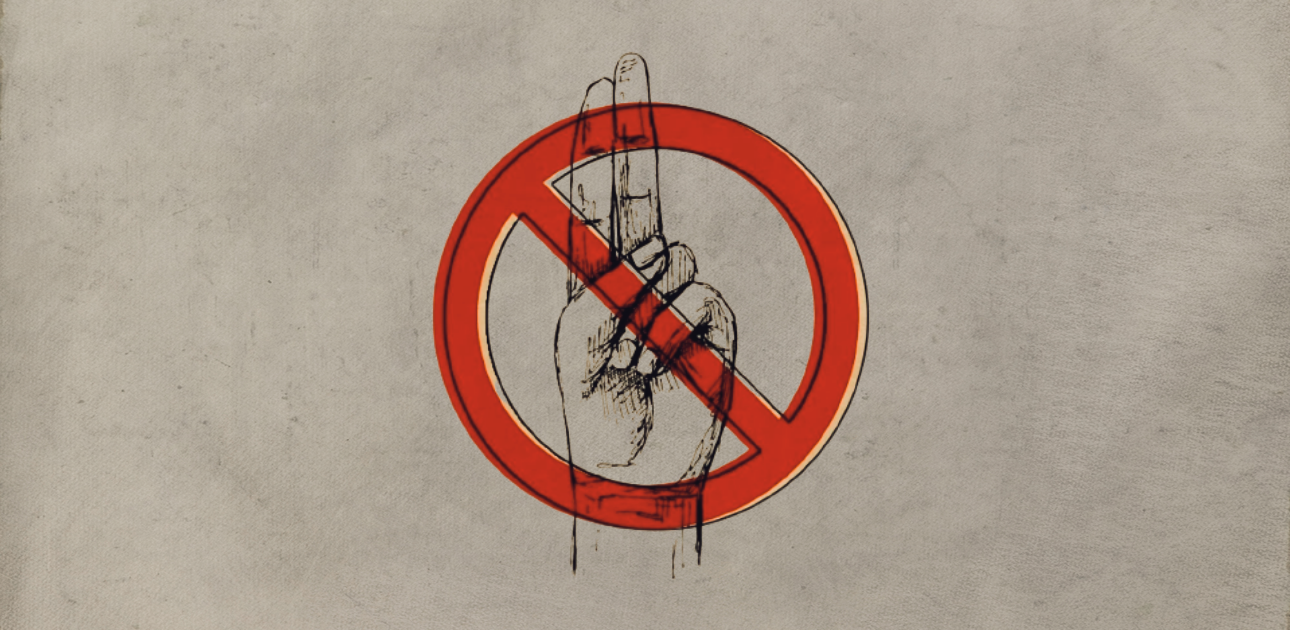
- The Court unequivocally banned the "two-finger test," deeming it demeaning, scientifically baseless, and lacking substantive evidential value.
- The examination was criticized for its victim-blaming nature and the humiliation and questioning of the victim's chastity. The Court clarified that the size of the vaginal opening does not offer relevant information in sexual violence cases.
- Regarding the victim's dying declaration, the Court held that while a magistrate should record it, a declaration made in front of the police is not necessarily inadmissible. The admissibility depends on the circumstances of each case.
- The Court emphasized that there is no rule mandating corroboration of a dying declaration through medical or other evidence, except in cases where the declaration is suspicious.
- The Court also clarified that whether a woman is "habituated to sexual intercourse" is irrelevant in determining the elements of Section 375 of the IPC.
Critical Analysis
- The Supreme Court's condemnation of the "two-finger test" reinforces its harmful and outdated nature. It has been criticized for victim-blaming, humiliation, and its lack of scientific validity.
- Various committees and guidelines have recommended its prohibition, and the Court's stance aligns with international standards.
- The Court's directive to the Union Health Ministry, state governments, and medical schools to prohibit and educate against the test is a significant step toward ending this practice and aligning with progressive and ethical standards.
- The case underscores that medical examinations are crucial for forensic purposes, but cannot definitively prove rape, which hinges on the issue of consent. Medical evidence can only confirm sexual intercourse, with the determination of rape being a matter of law.
- The judgment has not only banned the "two-finger test" but also reaffirmed that a woman's sexual history should not affect her credibility as a rape victim.
Conclusion
The Supreme Court's decision is a significant step forward in ensuring the dignity and rights of sexual assault victims while upholding the rule of law and eliminating harmful and discriminatory practices. It signals India's commitment to evolving and respecting international standards for sexual assault cases. For legal assistance, contact us.


